Comprehensive Chainlink Functions Guide🧵
👉 Disclaimer: All opinions are the author’s own.
In this blog post, I will explain Chainlink Functions from scratch. If there is something you do not understand, please do not hesitate to share it with me :)
Hey, my readers! I am excited to explain Chainlink Functions and how we can use it in our apps!
Now, let me talk about what you will see in this article. it will be a long article again (sorry). Long articles always appear because I want to share everything I’ve learned.
The content of this article is as follows:
✅ Chainlink APIs
✅ Chainlink Functions and Its Relation to Chainlink APIs
✅ Chainlink Functions
✅ How To Use Chainlink Functions
✅ Potential Use Cases for Chainlink Functions
✅ Decentralized Charity Platform With Chainlink Functions
This is me👇🏻 You can see all my content here.
This is my CCIP Guide👇🏻
This is my RWA’s Guide 👇🏻
Chainlink Functions Learning Path 📌
+----------------------------------------------------------+
| 1. Blockchain and Smart Contracts                        |
|    - Blockchain Fundamentals - Smart Contracts           |
|    - Ethereum Basics                                     |
+----------------------------------------------------------+
| 2. The Need for Oracles                                  |
|    - Limitations of Smart Contracts - Role of Oracles    |
+----------------------------------------------------------+
| 3. Introduction to Chainlink                             |
|    - What is Chainlink? - Decentralized Oracles          |
+----------------------------------------------------------+
| 4. Chainlink Nodes                                       |
|    - Basics of Chainlink Nodes - Setting Up a Node       |
+----------------------------------------------------------+
| 5. Deep Dive into Chainlink Functions                    |
|    - Introduction - How They Work - Use Cases            |
+----------------------------------------------------------+
| 6. Chainlink AnyAPI                                      |
|    - Introduction to AnyAPI - Fetching Data with AnyAPI  |
+----------------------------------------------------------+
| 7. Advanced Chainlink Features                           |
|    - Threshold Signatures - External Adapters            |
|    - Decentralized Data Aggregation                      |
+----------------------------------------------------------+
| 8. Hands-On Tutorials                                    |
|    - Setting Up a Dev. Env. - Building a Simple dApp     |
|    - Advanced Projects                                   |
+----------------------------------------------------------+
| 9. Best Practices and Tips                               |
|    - Optimizing Gas Usage - Ensuring Data Security       |
+----------------------------------------------------------+
| 10. Community and Further Resources                      |
|    - Chainlink Community - Ongoing Learning              |
+----------------------------------------------------------+
👇🏻 Chainlink’s Commitment: Security & Its Integral Role in Blockchain 👇🏻
I’d like to shed light on an aspect of Chainlink that underscores its dedication: its unwavering focus on security and its pivotal role in the blockchain ecosystem.
🔒 Reliable Infrastructure: Chainlink’s decentralized architecture stands as a testament to its commitment to reliability. By ensuring no single entity has unilateral control, it guarantees the authenticity and integrity of the data it handles.
🔒 Rigorous Data Verification: Chainlink employs a meticulous consensus mechanism that cross-references data fetched by various nodes. This rigorous process ensures that the data delivered to smart contracts is both accurate and free from undue influence.
🔒 Adaptable Connectivity: Chainlink’s capability to create external adapters showcases its forward-thinking approach. This feature allows for secure connections to diverse data sources, ensuring smart contracts remain versatile and relevant.
🔒 Transparent Operations: Chainlink operates with a principle of transparency. All its operations are open for audit, reinforcing its commitment to trustworthiness and accountability in the blockchain community.
In conclusion, Chainlink’s robust security measures and its role as a bridge between on-chain and off-chain data sources solidify its position as an indispensable asset in the blockchain realm. Its dedication to delivering real-world data with precision and integrity ensures that smart contracts can operate at their optimal potential.
This Guide is again a bit long. I can never shorten my articles. Sorry for this :D
Chainlink Functions Overview
🐝 Guess what? Chainlink Functions is now in BETA!! But remember, it’s still an in-development service. As with all things new, there might be a few changes here and there. Keep an eye on this space for all the latest updates!
So, What’s Chainlink Functions All About? 🤔
👀 Imagine giving your smart contracts a magic wand that lets them fetch data from all over the web and do some cool custom computations. That’s basically what Chainlink Functions does! And the best part? You don’t have to set up or manage a Chainlink node to use Functions. Plus, it’s got this super-secret encryption feature that ensures your data is safe and sound.
Chainlink Functions offers smart contracts a reliable way to access a trust-minimized computing framework. This allows contracts to retrieve data from various APIs and execute custom computations. Instead of managing a Chainlink node yourself, Chainlink Functions offers decentralized offchain computation and consensus. This ensures that no small group within the network can alter the response sent back to your contract. Additionally, Chainlink Functions lets you add encrypted secret values to your requests using threshold encryption. Only through a joint decryption process involving multiple DON nodes can these secrets be decrypted. This unique feature facilitates the inclusion of API keys or other confidential data in your source code, granting access to authenticated APIs.
Payment Mechanism: To cover the costs of your requests, you’ll need to fund a subscription account using LINK. Charges are applied when the DON processes your requests 🙂
Chainlink Functions: A Beginner’s Guide
Here, I will use a metaphor to help you better understand the role and purpose of Chainlink Functions.
Imagine you’re a chef in a kitchen (your smart contract), and you need ingredients (data) from various stores (APIs) to cook a dish. But there’s a catch: you can’t leave the kitchen. So, how do you get those ingredients?
Enter Chainlink Functions . Think of it as your team of trusty delivery drivers.
When to Use Chainlink Functions 🧐
How to Use Chainlink Functions?🛠️🛠️
Okay okay, we have to understand the technical side of it. To use Chainlink Functions, you will need to:
Potential Use Cases for Chainlink Functions:
☄️We understand what Chainlink Functions are and how APIs work, so what’s next? I would like to give you examples of where and for what purposes Chainlink Functions can be used😉
Next Steps:
Now, let’s get acquainted with the basics in the Getting Started guide. Then, dive deeper into advanced features with the advanced tutorials from the Chainlink Labs DevRel team. After that, we will learn core concepts, the architecture of Chainlink Functions, and the billing process.
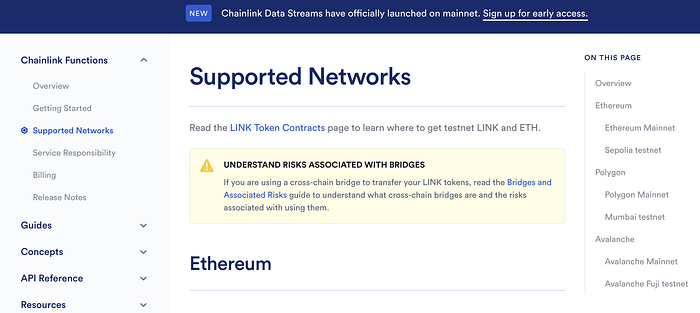
Which Networks Support Functions? 🌐
Curious about which networks support Chainlink Functions? Check out our Supported Networks section.
Diving into Chainlink Functions Architecture 🏛️
Ever wondered about the nuts and bolts of Chainlink Functions? Let’s unravel the magic code behind it!
The Basics:
The Key Players 🎭:
Initiator:
Consumer Contract:
FunctionsRouter Contract:
FunctionsCoordinator Contracts:
Chainlink OCR (Off-Chain Reporting):
Secrets Endpoint:
Serverless Environment:
How It All Works Together 🔄:
The Journey of a Request 🚀:
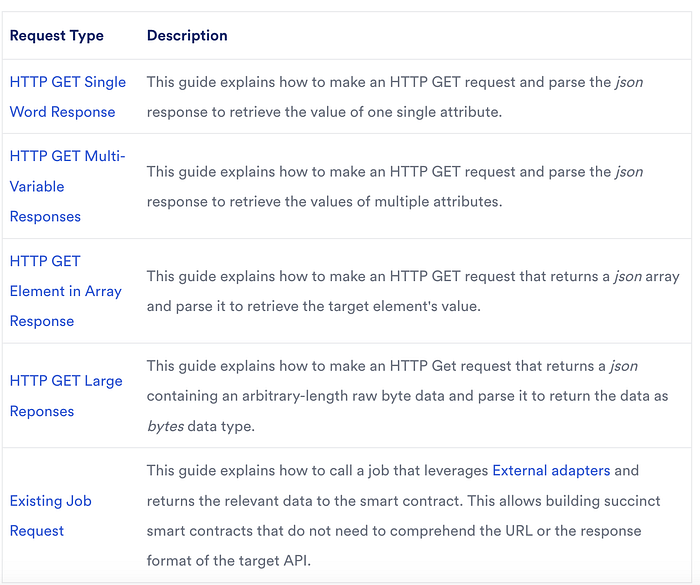
A Few Things to Remember 📌:
If you have questions about Chainlink Functions and APIs, feel free to contact me. I have also started a book about Data Science. I am looking forward to sharing my notes about the book and my favorite resources on data science with you in the future.

You can join our groups to be informed about training and events!🤗 Sign up for my meetups!!
🌻👻 I hope the contents of my articles are beneficial to you🧑🎤👩🏼🎤 Do not hesitate to contact me 😉
Thank you for reading my articles and blog posts.