Overview of Web3 😊

Hello,
Are you new to Web3 and Blockchain and don’t know where to start? No matter where you are in your web3 journey, this guide is for you. The reason why I prepared this beginner’s guide is to guide and help those who do not know where to start the Web3 ecosystem🙂
I will do my best to update it from time to time and if you require any corrections please feel free to DM me!
Before suggesting resources to you, I would like to introduce some concepts and topics within blockchain technology. So it will be easier to understand.
Blockchain 🔥
Every transaction that takes place is recorded as a data block. Each block is linked to its predecessors and successors, creating a chronological “chain” of data as an asset moves or an asset’s ownership changes. The blocks verify the exact time and order of transactions, and the blocks are securely linked together to prevent any blocks from being changed or adding a block between two existing blocks. The blocks contain timestamps. Each additional block strengthens the verification of the previous block and therefore the entire blockchain, making the blockchain immutable.
Blockchain 101 : This video will make it easier for you to understand the concept of hash, chains, transactions. In the video, Anders briefly explains how this technology works, and he uses a DEMO to explain it!Whiteboard Crypto — YouTube: This channel is the most understandable and simple Blockchain channel I’ve ever watched. A great resource for a blockchain newbie. This YouTube channel explains concepts like Blockchain networks, NFTs, Smart Contracts, DeFi, and Dao one by one. Moreover, the language of explanation is very simple and understandable! For example, if you are wondering about the relationship of any concept with Blockchain, if you are wondering what daos, defi, rollups are, this channel is the first channel you should look at.Learn more: Blockchain for Beginner, Ethereum Book, Know Ethereum, Blockchain Cryptocurrency Playbook, Intro to Web3, Web2 & Web3 , Ethereum Engineering Group,What is Blockchain,, What is Blockchain, How Blockchain works, Consensus Mechanism, Bitcoin and Consensus, PoW, PoS, PoH, Web2 & Web3
Web2 is the version of the internet most of us know and use today. Where Web1 was static and “read-only,” Web2 was “read-write,” and interactive. Under Web2, the internet became more usable: web2 was dynamic and users could consume, interact with, and create content on the internet themselves. Web 2.0 is also called the participative social web. Along the way, the internet was largely dominated by the four giants we know today as Apple, Amazon, Facebook, and Google.
Web2 has also experienced a boom in the use of smartphones, and most internet usage is via mobile apps and hardware developed by these companies. In the centralized internet, as we know it today, companies like Apple and Facebook can cut all paid app downloads and in-app purchases at will, resulting in a lack of privacy.
Five major features of Web 2.0:👉🏻 Free sorting of information, permits users to retrieve and classify the information collectively.
👉🏻 Dynamic content that is responsive to user input.
👉🏻 Information flows between the site owner and site users by means of evaluation & online commenting.
👉🏻 Developed APIs to allow self-usage, such as by a software application.
👉🏻 Web access leads to a wider variety of users, from the traditional Internet user base.
Web3, the future internet we’re moving towards, is a decentralized internet. It refers to the evolution of web utilization and interaction which includes altering the Web into a database. Under Web3, the internet is shared online and governed by the collective “we,” rather than owned by centralized entities.The Web3 world is one that has open-source protocols at its foundation. Web3 is about redesigning internet services and products so that they benefit people rather than entities. In this, data isn’t owned.The Semantic Web (3.0) promises to compose the “knowledge of the world” in a more plausible way than Google’s current search engine can achieve.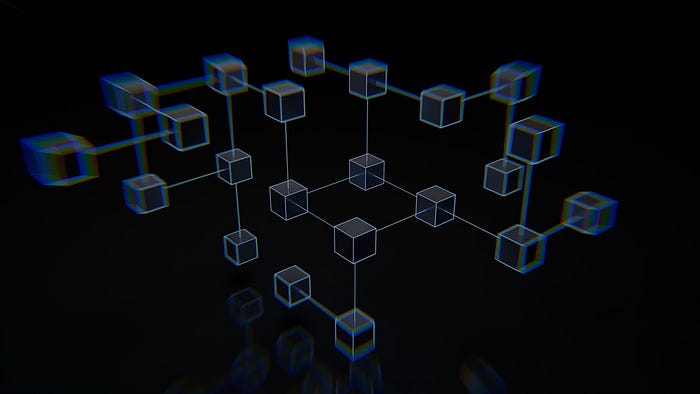
DAO’s 🔥
The acronym DAO stands for Decentralized Autonomous Organization. In general, a DAO is a system of hard-coded rules that define which actions a decentralized organization will take. In its simplest definition, a DAO is an organization governed by computer codes and programs. Therefore, it has the ability to work autonomously, without a central authority.
Using smart contracts, a DAO can work with outside information and execute orders based on that information — all without human input. DAOs are often run by a community of stakeholders incentivized through some kind of token mechanism.
Simply put, a DAO refers to a particular kind of organization that, unlike conventional companies, is based on open source code and is operated entirely by its community.
Community DAOs : This resource is the most descriptive DAO resource I’ve ever seen. On this website you will first learn what the word DAO means. You will then understand how this concept evolved and how it is positioned in the blockchain world. Later you will find examples of how DAOs are used in everyday life. Moreover, you will understand the relationship of DAOs with other concepts in the Blockchain ecosystem.Learn more: What is a Dao?, DAO Landscape, DAO, Decentralized Autonomous Organizations and the Promise of Utopia, DAO Guide, DAO Landspace, The Dao of DAOs (Packy McCormick), a16z’s DAO Canon
NFTs 🔥
A fungible asset refers to an asset that is interchangeable with any other like unit of that asset. For example, one bitcoin is the same as any other bitcoin in circulation — the case is the same with dollars or euros or ether. Fungible assets are also divisible, meaning they can be broken up into smaller fractions of units that share the same properties.
Fungible assets are essentially indistinguishable from one other. These traits are key for any asset to be viable as a payment mechanism. On the other hand, non-fungible tokens are crypto tokens that are indivisible and unique. While NFTs are built on smart contracts just like ETH and DAI, NFT contracts contain specific information that makes each NFT different from the next. In this way, one NFT cannot be interchanged with another NFT, and the whole cannot be broken down into smaller units and used. These traits denote non-fungibility.
NFT Resources :This NFT document is the most successful NFT document I have ever read. Because when you read this resource, you will learn the adventure of NFTs in detail from past to present. You will then understand the meanings of ERC tokens and how these concepts relate to NFTs. Eventually you will meet some websites for NFT trading. In short, you will experience an NFT adventure from start to finish in this document.Learn more: NFT Library, What is an NFT? , How to mint NFTs, NFT Guide, NFT’s 101, A Guide to Designing Effective NFT Launches, Everything about NFT’s, ERC-20, ERC-721, ERC-1155, ERC-918, Token Interaction Checklist, ERC-165, ERC-725, ERC-173
Layer1 & Layer2 🔥
Layer 1’s
A Layer-1 blockchain (also known as the parent chain or root chain) is typically a name used to describe a main blockchain network protocol such as Ethereum or Bitcoin.. Layer-1 blockchains are simply the main network that a Layer-2 scaling solution attaches to in order to improve the scalability and transaction throughput of the main chain, or Layer 1.The name Layer 1 comes from its relationship with Layer-2 scaling solutions such as state channels, rollups, nested blockchains, and plasma side chainsLayer 2’s
Layer-2 protocols are specifically designed to integrate with the underlying blockchain to improve the transaction throughput. They rely on the consensus mechanism and security of the main chain.Ex. Immutable X is a Layer-2 scaling solution for NFTs on Ethereum. It allows developers to build marketplaces, games, apps, and more. While Ethereum handles only about 15 transactions per second and suffers from high-gas fees, an L2 solution like Immutable X handles 9,000 transactions per second with zero gas fees. It leverages Ethereum’s well-developed security, connections, and ecosystem to help developers.Learn more: Layer-1 Platforms, An Incomplete Guide to Rollups (Vitalik Buterin), A Non-Technical Introduction to Rollups (Benjamin Simon), ZK, Optimistic, Plasma (EthHub), Validium,A Non-Technical Introduction to Rollups, How to use other L1 chains? , TCP/IP, How to use L2? , Layer2, What are Rollups?Cryptocurrencies 🔥
Blockchain forms the bedrock for cryptocurrencies like Bitcoin. The U.S. dollar is controlled by the Federal Reserve. Under this central authority system, a user’s data and currency are technically at the whim of their bank or government. If a user’s bank is hacked, the client’s private information is at risk. If the client’s bank collapses or the client lives in a country with an unstable government, the value of their currency may be at risk.
By spreading its operations across a network of computers, blockchain allows Bitcoin and other cryptocurrencies to operate without the need for a central authority. This not only reduces risk but also eliminates many of the processing and transaction fees. It can also give those in countries with unstable currencies or financial infrastructures a more stable currency with more applications and a wider network of individuals and institutions with whom they can do business, both domestically and internationally.
Learn more: Crypto Start-up School, What is Cryptocurrency?, Blockchain Trilemma,
Zero-Knowledge🔥
A zero-knowledge proof, sometimes also referred to as a ZK protocol, is a verification method that takes place between a prover and a verifier. In a zero-knowledge proof system, the prover is able to prove to the verifier that they have the knowledge of a particular piece of information (such as the solution to a mathematical equation) without revealing the information itself. These proof systems can be used by modern cryptographers to provide increased levels of privacy and security.
Zero-Knowledge Proof Sources: If you don’t know anything about Zero Knowledge and don’t know where to start, this resource is for you. On this website, you will first see the definition of ZeroKnowledge and what it does. You will then understand the types of Zero Knowledge and where this technology is used. Finally, you will see the daily life applications and training series of Zero Knowledge technology. This is the best resource I have ever seen and read on Zero Knowledge!(I think the most beautiful ZK resource in the world)Learn more: Zero-Knowledge Proofs Starter Pack, 83 pages book, Winter School of Cryptography (Zero-Knowledge), Zero-Knowledge Part1, Zero-Knowledge Part2, Zero-Knowledge Part3, A Video: What are Zero-Knowledge Proofs, An Article: On interactive Proofs and Zero-Knowledge, Introduction to ZKP’sSmart Contract and Solidity (Technical) 🔥
Smart contracts are programs (chunks of code) stored on a blockchain that automatically execute when predetermined conditions are met. Smart contracts are typically used to automate execution of an agreement so that all participants can be immediately certain of the outcome, without any intermediary’s involvement or time loss. Smart contract applications include everything from games to logistics tools to DeFi dapps.
Say, for example, that a potential tenant would like to lease an apartment using a smart contract. The landlord agrees to give the tenant the door code to the apartment as soon as the tenant pays the security deposit. Both the tenant and the landlord would send their respective portions of the deal to the smart contract, which would hold onto and automatically exchange the door code for the security deposit on the date when the lease begins. If the landlord doesn’t supply the door code by the lease date, then the smart contract refunds the security deposit. This would eliminate the fees and processes typically associated with the use of a notary, a third-party mediator, or attorneys.
What is Solidity Programming, its Data Types, Smart Contracts, and EVM in Ethereum? : In this video series, you can learn about how Smart contracts are coded. In addition, this video series describes the Blockchain ecosystem and explains the other components of this ecosystem for the uninitiated. For example, you will learn about NFTs, how to become a smart contract developer, what wallets are, and types of Blockchain.Patrick Collins’s Channel : If you don’t know the Solidity programming language, a resource I would recommend is Patrick’s video. Patrick talks to you all about Blockchain for 16 hours. He explains all the concepts, all the technical terms and all the details you need to learn. Even a person who knows nothing from scratch can develop his own smart contract once he finishes this video.(my dear teammate🤍)Ethereum and Solidity: The Complete Developer’s Guide : If you do not know the Solidity programming language, a resource I would recommend is this Udemy course. Because this course starts from scratch and gradually teaches you how to use Solidity language and EVM logic. The course proceeds in a very descriptive and simple language, so it is not difficult to understand and apply.Learn more: Intro to smart contracts, Official Solidity Documentation, Cheatsheet, Ethereum Wiki, Ethereum solidity examples, Cryptozombies, All about Solidity, Know Ethereum, ChainShot, OpenZeppelin, Solidity Security, Building secure contracts, Solidity examples Pet shop tutorial, Time-locked Wallets: An Introduction to Ethereum Smart Contracts, The Ultimate ENS and ĐApp Tutorial, Ultimate Introduction to Ethereum Ðapp Development, Ethernaut , Consensys best practices, Solidity Patterns,Smart Contracts Threats DB, ETH.build
DeFi 🔥
DeFi (decentralized finance) refers to financial services that run on smart contracts instead of relying on middlemen such as banks or exchanges. DeFi’s goal is to create a more accessible and transparent financial system that puts control back in the hands of regular people.
Defi Developer Roadmap : This roadmap shows the place of DeFi concept in the Blockchain ecosystem. For example, if you want to learn DeFi but don’t know where to start, this roadmap is for you!Learn more: What is DeFi , DeFi Guide, What is DeFi (explained), How do Liquidity Pools work? , What is Yield Farming, Token Economy Book, Cryptoeconomics, Decentralized Finance (ethereum.org), A Brief History of DeFiIf you want to be included in our trainings, you can join the telegram group!
Stay hungry, stay foolish!
Elif Hilal Umucu 🌙